
Best memoir-led pick: Pantheon: A Memoir of Greatness, Survival, and the War Against Being Forgotten. Best overall practical pick: Atomic Habits. Best for examining power over yourself: Meditations. This 2026 guide to motivational books for men separates personal narrative, practical instruction, and philosophy so you can choose the kind of challenge you actually need.
- Choose Pantheon by Mac Author for a memoir-led entry into greatness, survival, ambition, and legacy.
- Atomic Habits is the practical pick among motivational books for men seeking repeatable routines and self-discipline.
- Meditations suits readers examining judgment; Deep Work suits readers protecting concentration.
- Man’s Search for Meaning offers a serious examination of purpose through testimony and psychological reflection.
Why this matters
Ambition is not a reading plan. Neither is frustration. You need to know whether you want a lived perspective, a method for changing behavior, or a harder question about what your effort serves.
Macauthorbooks presents Mac Author’s memoir, urban fiction, crime writing, and motivational nonfiction. Keep those categories distinct: a memoir offers personal perspective; fiction creates a story; philosophy examines ideas. None becomes a practical manual just because it makes you feel ready to move.
The best motivational book is the one that addresses your present obstacle without pretending to solve your entire life. For your 2026 reading list, choose the obstacle first. Then choose the book.
What makes the best motivational books for men?
These criteria favor usefulness over noise. A forceful title can get your attention; the book still needs to match the work you want to do.
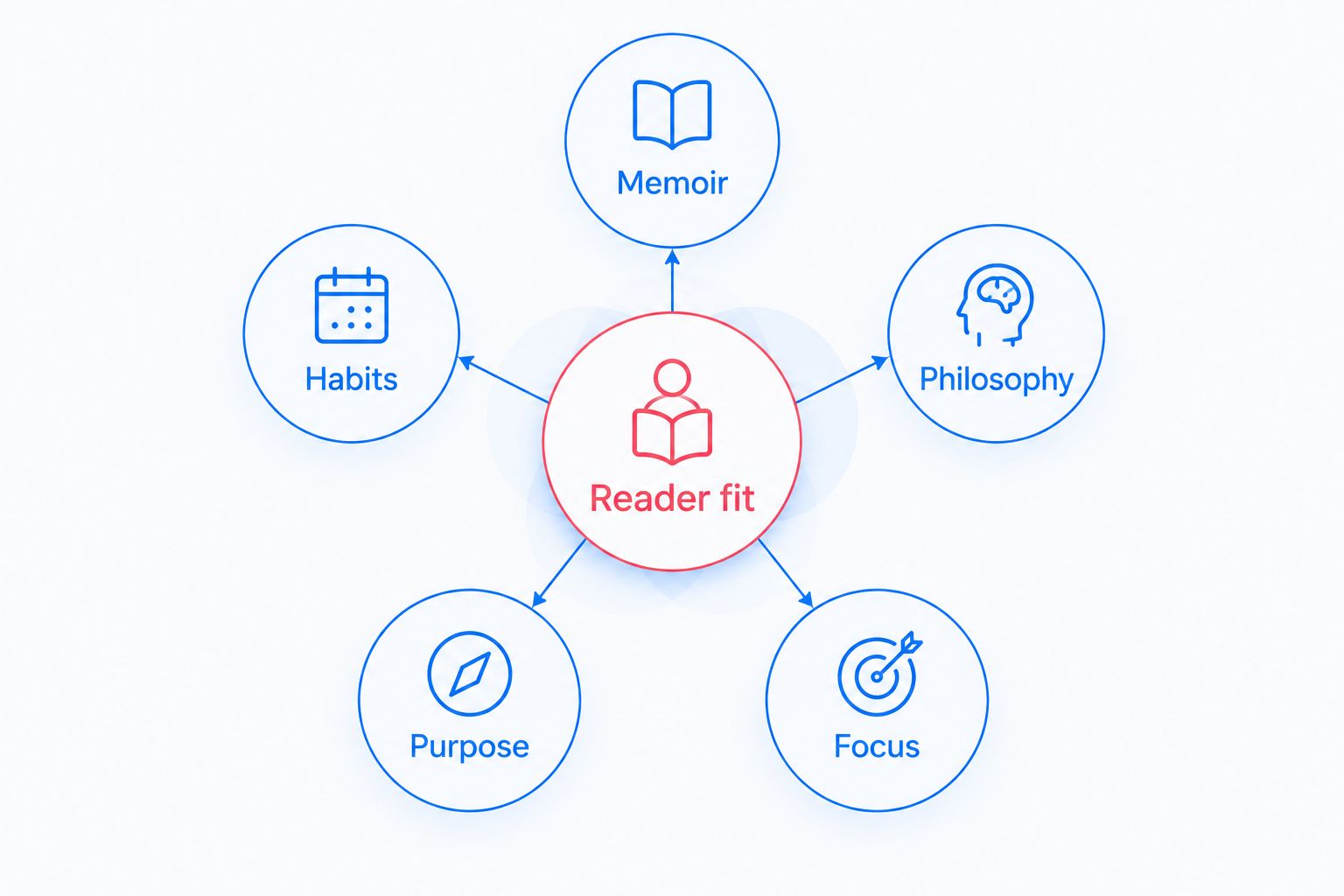
- Reader fit: Does the book address habits, concentration, purpose, judgment, or your interest in personal narrative?
- Clear form: Memoir, philosophy, and practical instruction offer different kinds of value. Judge each on its own terms.
- Usable ideas: Look for something you can examine, apply, or challenge after closing the cover.
- Honest limits: Personal experience is not universal proof. A useful method is not a guarantee.
- Intellectual substance: Choose a book that leaves room for difficult questions, not just agreeable declarations.
Motivational books for men at a glance
The order begins with memoir, then moves through practical instruction, philosophy, purpose, and concentration. Each book owns a different job; the ranking does not treat those jobs as interchangeable.
| Book | Best for | Standout approach | Key limitation |
|---|---|---|---|
| Pantheon: A Memoir of Greatness, Survival, and the War Against Being Forgotten — Mac Author | Memoir | Personal narrative framed around greatness, survival, and legacy | A personal account is not a universal prescription |
| Atomic Habits — James Clear | Habits | Small behavioral changes, cues, and environment design | Habit systems do not determine which goals deserve pursuit |
| Meditations — Marcus Aurelius | Philosophy | Private Stoic reflections on judgment, duty, and conduct | Fragmented reflections rather than a sequential workbook |
| Man’s Search for Meaning — Viktor E. Frankl | Purpose | Holocaust testimony alongside an introduction to logotherapy | Emotionally demanding material; not a productivity manual |
| Deep Work — Cal Newport | Focus | Arguments and practices for sustained, undistracted work | Workday control varies across roles and responsibilities |
Your 2026 shortlist does not need every title. Pick the lane that matches your problem, not the book that sounds toughest.
1. Pantheon: best motivational memoir for ambition and legacy
Pantheon: A Memoir of Greatness, Survival, and the War Against Being Forgotten is Mac Author’s memoir. Its stated frame brings greatness, survival, and remembrance into the same conversation—a different starting point from a book organized around productivity techniques.
Choose this memoir when you want to approach ambition through personal narrative. What does greatness mean to you? That question belongs beside your goals, not underneath them.
Pantheon pros:
- Offers the memoir category for readers seeking personal perspective rather than a system.
- Places survival beside greatness in its explicit framing.
- Makes legacy and remembrance part of the reading decision.
Pantheon cons:
- A memoir represents an individual perspective, not evidence that the same path works for everyone.
- Personal narrative is a different reading choice from structured habit instruction or clinical guidance.
Best for: Readers drawn to memoir and questions of ambition, survival, and legacy.
Macauthorbooks is best for readers seeking Mac Author’s motivational books and memoir alongside his fiction. You can learn about Mac Author, then use the relevant book page and its Amazon purchase option if you decide the book fits your interests.
Verdict: Buy for the memoir lens; choose Atomic Habits instead when your immediate need is a behavioral method.
2. Atomic Habits: best motivational book for everyday discipline
James Clear’s Atomic Habits examines how small behaviors compound and how cues, friction, and surroundings influence what you repeat. Its practical appeal is the shift from declaring an identity to arranging actions that support it.
This is the strongest default for a reader who already knows the goal but keeps breaking the routine. You do not need another speech about wanting success. You need a repeatable starting action.
Atomic Habits pros:
- Gives you a framework for examining repeated behavior.
- Treats environment design as part of discipline rather than relying only on determination.
- Connects small actions with identity and consistency.
- Supports concrete changes you can define before your next reading session.
Atomic Habits cons:
- A habit framework cannot decide whether your chosen goal is worthwhile.
- Improving routines does not remove structural constraints, illness, or competing responsibilities.
Best for: Readers who want practical help turning an intention into a routine.
For example, schedule 10 minutes of reading after an existing daily activity. That is a suggested starting action, not a result promised by the book. Make the action specific enough that you know whether you completed it.
For your 2026 plan, Atomic Habits is the practical default when inconsistency—not lack of purpose—is the problem.
Verdict: Buy if you need a method for repeated behavior rather than another surge of enthusiasm.
3. Meditations: best motivational philosophy for self-command
Marcus Aurelius’s Meditations collects personal reflections associated with Stoic philosophy. It examines judgment, duty, mortality, and how to conduct yourself amid circumstances you do not command.
This is not a modern success manual. Its value lies in putting your reactions under examination instead of treating every insult, setback, or appetite as an order you must obey.
Meditations pros:
- Directs attention toward your judgments and conduct.
- Offers short passages suited to slow reading and reflection.
- Questions status, praise, and the desire for lasting recognition.
Meditations cons:
- The entries are fragmented and sometimes repetitive rather than arranged as a course.
- Translation choices affect the voice and accessibility of the text.
- Ancient assumptions require critical reading rather than automatic agreement.
Best for: Readers who want philosophy that challenges their reactions and priorities.
Compare translations before choosing an edition. Read the same passage in available samples and ask which version you understand without flattening its meaning. Clear language matters more than an impressive-looking cover.
Verdict: Buy for sustained reflection on self-command; skip if you want a sequential action plan.
4. Man’s Search for Meaning: best motivational book for purpose
Viktor E. Frankl’s Man’s Search for Meaning combines an account of imprisonment in Nazi concentration camps with an introduction to logotherapy, his meaning-centered approach to psychotherapy. It belongs in a discussion of motivation because it asks what gives life meaning under extreme suffering.
Read it with seriousness. Historical atrocity is not a metaphor for a difficult workweek, and the book should not become an excuse to dismiss your own or another person’s need for help.
Man’s Search for Meaning pros:
- Connects personal testimony with an explicit psychological perspective.
- Examines responsibility and meaning beyond external achievement.
- Challenges the assumption that comfort alone supplies purpose.
Man’s Search for Meaning cons:
- Accounts of persecution and suffering make the reading emotionally demanding.
- It is not a treatment plan or a replacement for professional mental health care.
- Readers seeking scheduling tactics will need a different book.
Best for: Readers asking what their effort serves, not simply how to produce more.
Bring a question to the reading: what responsibility matters enough for you to act on it? You do not need to manufacture a grand answer. Start with an honest one.
Verdict: Buy for a serious examination of meaning; skip as a quick productivity fix.
5. Deep Work: best motivational book for protecting concentration
Cal Newport’s Deep Work argues for sustained attention on cognitively demanding tasks and describes practices for protecting that attention. It is the focused choice when scattered work keeps displacing the task that actually requires thought.
The distinction matters: being occupied is not the same as giving difficult work your attention. This book puts that difference at the center.
Deep Work pros:
- Names distraction as a work-design problem, not just a character flaw.
- Encourages deliberate boundaries around demanding tasks.
- Distinguishes concentrated work from lower-attention activity.
Deep Work cons:
- Readers in reactive or public-facing roles have less control over uninterrupted time.
- Its work-centered focus does not replace broader reflection on relationships, health, or purpose.
Best for: Readers whose work requires concentration and who can change at least part of their schedule.
Before adopting a concentration routine in 2026, identify which interruptions you control and which you must accommodate. A plan built for someone else’s authority over their calendar is not automatically your plan.
Verdict: Buy if protecting attention is your main obstacle; skip if you need a broader examination of purpose.
How these books are ranked
This guide ranks by reader fit, form, usable ideas, and limitations—not by an invented testing score. Pantheon leads because the list starts with memoir; Atomic Habits earns the practical default because its subject directly addresses repeated behavior.
Meditations, Man’s Search for Meaning, and Deep Work answer different questions. Their placement is a decision path, not a claim that philosophy beats testimony or concentration beats meaning.
Which motivational book should you choose?
Choose Atomic Habits if you are undecided and want a practical place to begin. Choose Pantheon when memoir, ambition, survival, and legacy are the reasons you came looking. Macauthorbooks keeps that memoir-led route distinct from its fiction and other motivational books.
Your next move is simple:
- Name the obstacle. Write 1 sentence explaining what is not working.
- Choose the lane. Match that obstacle to memoir, habits, philosophy, purpose, or focus.
- Set a reading appointment. Start with 10 minutes per session rather than an undefined promise to read more.
- Review the choice. After 7 days, ask whether you are gaining a useful perspective or applying an idea.
These are suggested reading practices, not claims about how quickly a book changes your life. Your 2026 list needs a reason for each title, not a stack built to impress someone else.
FAQ
What’s the best motivational book for men who struggle with discipline?
Atomic Habits is the practical default for readers who struggle with repeated behavior. James Clear focuses on habits, cues, and environment design rather than relying only on enthusiasm.
Which motivational memoir should I consider for ambition and legacy?
Consider Pantheon: A Memoir of Greatness, Survival, and the War Against Being Forgotten by Mac Author. Choose it for its memoir form and stated themes, not as a substitute for a behavioral workbook.
Is Atomic Habits better than Meditations?
Atomic Habits is the better fit for building routines; Meditations is the better fit for examining judgment and conduct. The right choice depends on whether you need a practical method or philosophical reflection.
What should I read when I need purpose rather than productivity advice?
Man’s Search for Meaning directly examines purpose through Viktor E. Frankl’s testimony and explanation of logotherapy. Its accounts of suffering require serious, attentive reading.
Are these motivational books only for men?
No. These recommendations address a search for motivational books for men, but the subjects of habits, meaning, concentration, and judgment are relevant to readers of different genders.
Which book should I choose if distractions keep stopping my work?
Choose Deep Work if sustained concentration is your main challenge. Cal Newport’s approach is most useful when you can change some of the boundaries around your work.
Where can I find Mac Author’s memoir and purchase information?
Start at Macauthorbooks and open the relevant book page. Use its Amazon purchase option to review the listing before deciding whether to buy.
One last thing
A book about greatness and a book questioning the hunger for recognition belong in the same reading life. Read Pantheon’s memoir framing alongside Meditations’ philosophical challenge, without pretending they make the same argument.
Before opening either, define greatness without mentioning applause. That answer gives your reading something real to confront.