
Best memoir-led starting point: Pantheon: A Memoir of Greatness, Survival, and the War Against Being Forgotten. Best for daily habits: Atomic Habits. Best for examining purpose: Man’s Search for Meaning. This 2026 guide to books about personal growth starts with memoir, including the work featured by Macauthorbooks, then separates practical instruction from philosophical reflection.
- Start with Pantheon for a memoir-led reading choice framed around greatness, survival, and remembrance.
- Atomic Habits is the practical pick among books about personal growth for building repeatable behaviors.
- Choose Man’s Search for Meaning for purpose, Mindset for beliefs about ability, and Meditations for philosophical reflection.
- Match your reading to a real problem, then turn one useful idea into a specific action.
Why this matters
What are you trying to change: your behavior, your beliefs, or the story you tell yourself?
Those are different jobs. A memoir gives you a person’s account. A practical guide supplies methods. Philosophy asks you to examine the principles behind your choices. Calling all three self-improvement does not make them interchangeable.
Macauthorbooks is a starting point for readers seeking books about personal growth through memoir rather than instruction alone. Begin with that distinction, not a promise that reading will transform your life. A book can challenge your thinking; your conduct remains your responsibility.
What makes the best books about personal growth
For this 2026 reading list, the criteria are straightforward:
- A clear purpose: The book addresses a recognizable question, such as building habits, facing suffering, or responding to setbacks.
- An honest format: Memoir, psychology, practical guidance, and philosophy make different kinds of claims. Keep those boundaries intact.
- Usable reflection: You can identify something to reconsider or practice without pretending every passage is an instruction.
- Visible limitations: Personal testimony is not a universal formula. A compelling framework is not an answer to every problem.
- A distinct reading job: Each selection earns its place by serving a different need, not by repeating the same encouragement.
The strongest choice is the one that addresses your actual obstacle. Discipline is not always the missing piece. Sometimes you need a better question before you need another routine.
Books about personal growth at a glance
| Book | Best for | Standout approach | Key limitation |
|---|---|---|---|
| Pantheon: A Memoir of Greatness, Survival, and the War Against Being Forgotten — Mac Author | A memoir-led starting point | Its title foregrounds greatness, survival, and remembrance | A personal account should not be treated as a universal method |
| Atomic Habits — James Clear | Building everyday habits | Connects small behaviors with cues, environment, and repetition | Habit design does not resolve every emotional or structural obstacle |
| Man’s Search for Meaning — Viktor E. Frankl | Examining meaning under hardship | Combines testimony about concentration-camp imprisonment with an account of logotherapy | Its historical suffering demands more than a motivational reading |
| Mindset — Carol S. Dweck | Rethinking beliefs about ability | Distinguishes fixed and growth mindsets | Growth mindset is not simply positive thinking or praising effort |
| Meditations — Marcus Aurelius | Examining judgment and responsibility | Personal philosophical reflections grounded in Stoicism | Its fragmented structure offers no modern step-by-step program |
1. Pantheon: best for a memoir-led starting point
Pantheon: A Memoir of Greatness, Survival, and the War Against Being Forgotten is the memoir selection from Lyvonte Mazerati Byrd, known as Mac Author. Its full title places greatness, survival, and remembrance at the center of the reading invitation.
That framing matters. Wanting to achieve something and wanting to be remembered are not identical ambitions. The title gives you a sharp question to carry into the book: what does greatness mean when survival and legacy enter the picture?
Macauthorbooks brings memoir into the conversation about books about personal growth. Approach Pantheon as memoir, not as fiction, a psychology textbook, or a guaranteed route to success. The recommendation here rests on that stated format and thematic framing, not on claims about particular scenes or outcomes.
Pantheon pros:
- Gives readers a memoir option alongside instructional books.
- Names survival as well as achievement in its framing.
- Makes remembrance an explicit subject for reflection.
Pantheon cons:
- A memoir’s individual perspective cannot establish universal rules.
- Its stated format is not evidence of a structured exercise program.
Best for: Readers who want to begin with a personal account and questions about ambition, survival, and legacy.
Verdict: Buy if you want memoir; skip this selection if you specifically need a habit-building manual.
2. Atomic Habits: best for building everyday habits
James Clear’s Atomic Habits addresses behavior through small changes, repeated actions, and the conditions surrounding them. Its framework organizes habit formation around making behaviors obvious, attractive, easy, and satisfying.
This is the practical selection when your problem is execution. You know what matters, but the action keeps disappearing from your day. The book directs attention toward the setup around a behavior rather than relying entirely on determination.
For your 2026 reading plan, give the idea a concrete job. Choose one behavior, identify when it belongs in your day, and reduce the friction around starting. Treat that as an experiment, not proof that every problem is a badly designed habit.
Atomic Habits pros:
- Gives habit formation a recognizable framework.
- Connects behavior with environment and cues.
- Encourages attention to repeatable processes.
- Provides a practical counterpart to reflective reading.
Atomic Habits cons:
- A habit framework does not replace treatment or material support.
- Applying the framework still requires choosing a worthwhile goal.
- Readers seeking memoir or sustained philosophical argument need another selection.
Best for: Readers who want to make a useful behavior easier to repeat.
Verdict: Buy for practical habit design; skip it when your main question is meaning rather than execution.
3. Man’s Search for Meaning: best for examining purpose
Viktor E. Frankl’s Man’s Search for Meaning combines his account of imprisonment in Nazi concentration camps with an explanation of logotherapy, a therapeutic approach centered on meaning. It belongs on this list as an encounter with purpose under extreme suffering, not as a collection of productivity tips.
Read it with historical seriousness. Frankl’s testimony is not a metaphor for an inconvenient week, and another person’s suffering is not motivational fuel to consume casually.
The personal-growth question is narrower and harder: what gives your actions meaning when circumstances resist your wishes? You do not need to compare your experience with Frankl’s to examine that question honestly.
Man’s Search for Meaning pros:
- Joins personal testimony with a stated therapeutic perspective.
- Makes purpose, responsibility, and suffering central questions.
- Challenges a definition of growth based only on achievement.
Man’s Search for Meaning cons:
- Contains distressing accounts of persecution and imprisonment.
- Is not a daily routine or goal-setting workbook.
- Its argument should not become a demand that suffering must produce a lesson.
Best for: Readers ready to examine meaning without treating hardship as a slogan.
Verdict: Buy for a serious encounter with purpose; wait if the subject matter is not right for you now.
4. Mindset: best for rethinking beliefs about ability
Carol S. Dweck’s Mindset examines fixed and growth mindsets: contrasting beliefs about whether abilities are essentially fixed or can develop. It gives you language for examining how you interpret difficulty, feedback, and mistakes.
The useful distinction is not between winners and losers. It is between treating a setback as a final judgment of your ability and treating it as information about learning. That makes this book especially relevant when your self-description shuts down effort before you examine the task.
Do not reduce the argument to working harder. Strategies, feedback, resources, and support matter. Repeating an ineffective approach with greater intensity is not the same as learning.
Mindset pros:
- Provides a clear distinction for examining beliefs about ability.
- Connects interpretations of setbacks with responses to learning.
- Makes feedback a useful subject for personal reflection.
Mindset cons:
- The framework is easy to flatten into positive-thinking advice.
- A growth-oriented belief does not remove external barriers.
- Labeling yourself or other people can defeat the purpose of examining change.
Best for: Readers whose response to mistakes is to conclude they are incapable.
Verdict: Buy to examine your beliefs about learning; skip the idea that mindset alone explains success.
5. Meditations: best for examining judgment and responsibility
Marcus Aurelius’s Meditations consists of personal philosophical reflections associated with Stoicism. It repeatedly examines judgment, duty, mortality, and how to respond to events outside your command.
Choose it when you want to question your reactions rather than collect another achievement system. Its form invites slow reading. A short passage can become the subject of sustained thought without becoming a rule you accept uncritically.
Translation matters because wording shapes the reading experience. Compare sample passages before choosing an edition, and select language you can understand without losing the argument.
Meditations pros:
- Offers compact passages suited to rereading.
- Keeps responsibility and judgment in view.
- Provides a philosophical alternative to modern instructional books.
Meditations cons:
- Its fragmented structure requires patience.
- Ancient assumptions need critical examination, not automatic acceptance.
- Different translations produce different reading experiences.
Best for: Readers who want sustained reflection on conduct, judgment, and responsibility.
Verdict: Buy for slow philosophical reading; skip it if you need a sequential action plan.
How these books were ranked
This is a ranking by reading need, not a claim that different genres can be scored on one scale. The order begins with memoir to keep personal experience central, then moves through behavior, meaning, beliefs, and philosophical judgment.
The 2026 selections follow the criteria above: clear purpose, honest format, usable reflection, visible limitations, and distinct reading jobs. No selection earns a recommendation by promising a changed life. Your reason for reading determines the better choice.
Turn reading into a decision
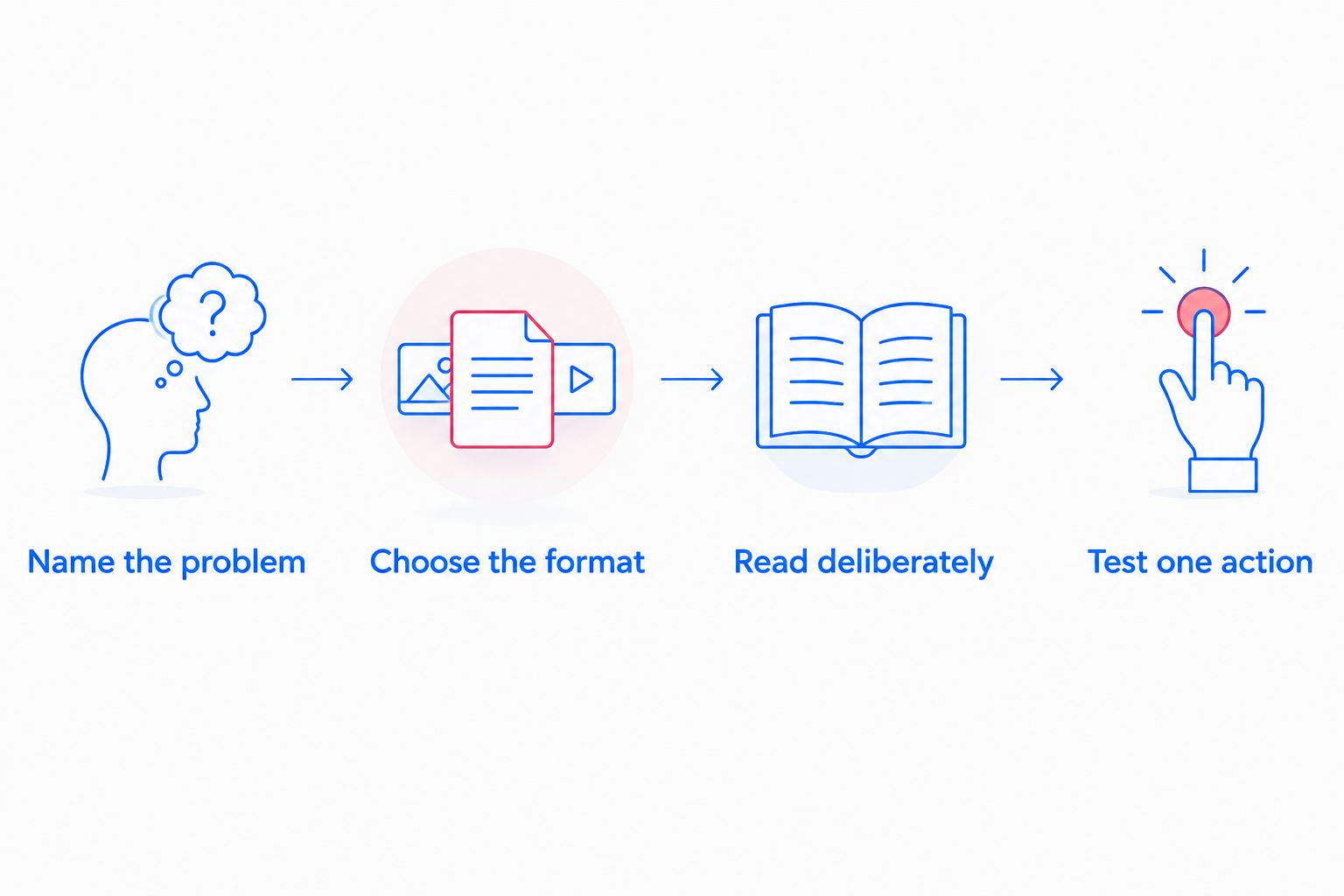
Before you choose, complete this sequence:
- Name the problem. Write 1 sentence describing what you want to change without using a vague label such as becoming better.
- Choose the format. Decide whether you need testimony, instruction, a psychological framework, or philosophy.
- Read deliberately. Set aside 10 minutes to read without switching between books or collecting quotations.
- Test one action. For 7 days, try one relevant behavior or reflection and record what you actually did.
These are suggested reading practices, not a schedule promised by any author. A memoir passage might produce a question rather than an action. Respect that difference.
Which book should you choose?
Choose Atomic Habits as the default when you want a practical change in everyday behavior. Choose Pantheon when your starting point is memoir and the questions named in its title: greatness, survival, and remembrance.
For your 2026 reading list, one well-matched book is a better starting commitment than a stack chosen without a purpose. Macauthorbooks keeps Mac Author’s work central for readers who want to begin with memoir. Explore the relevant book listing and its Amazon purchase option before deciding.
Explore Mac Author’s books
Find the memoir-led starting point that matches your reading interests.
FAQ
What are the best books about personal growth in 2026?
Choose Atomic Habits for everyday behavior, Pantheon for a memoir-led starting point, and Man’s Search for Meaning for examining purpose. Mindset addresses beliefs about ability, while Meditations offers philosophical reflection.
Is Pantheon a memoir or a self-help book?
Pantheon: A Memoir of Greatness, Survival, and the War Against Being Forgotten is presented as a memoir. Read it as a personal account, not as a guaranteed self-improvement method.
Should I start with Atomic Habits or Mindset?
Start with Atomic Habits for behavior design and Mindset for beliefs about learning and ability. Choose according to whether your immediate obstacle concerns execution or your interpretation of difficulty.
Can a memoir help with personal growth?
A memoir can give you another person’s perspective to examine alongside your own choices. Personal testimony is not a universal formula, so distinguish reflection from instruction.
Is Man’s Search for Meaning a motivational book?
Man’s Search for Meaning combines historical testimony with an explanation of logotherapy. Reducing it to motivation overlooks its account of persecution, suffering, and meaning.
Is Meditations suitable for a beginner?
Meditations is a possible starting point for a beginner willing to read slowly and examine unfamiliar ideas. Compare translation samples because its fragmented structure and wording affect accessibility.
How do I apply what I read in a personal-growth book?
Choose one relevant idea and define what applying it would look like in your conduct. Record the action or reflection rather than treating finished pages as evidence of personal change.
One last thing
You can finish a book without agreeing with it. That is not failure. Distinguishing testimony from evidence, a useful principle from an overreach, and ambition from the desire for recognition is part of reading with discipline.
Before opening the next book, write down one idea you accept and one you challenge. Make your judgment answerable to reasons. That is a stronger finish than another saved quotation.