
Best memoir-led starting point: Pantheon: A Memoir of Greatness, Survival, and the War Against Being Forgotten by Mac Author. Best for building habits: Atomic Habits. Best for examining purpose: Man’s Search for Meaning. These inspiring motivational books offer different starting points for your 2026 reading: personal testimony, practical discipline, or a harder examination of what makes life meaningful.
- Start with Mac Author’s Pantheon if you want a memoir framed around greatness, survival, and legacy.
- Among inspiring motivational books, Atomic Habits is the practical pick for building repeatable routines.
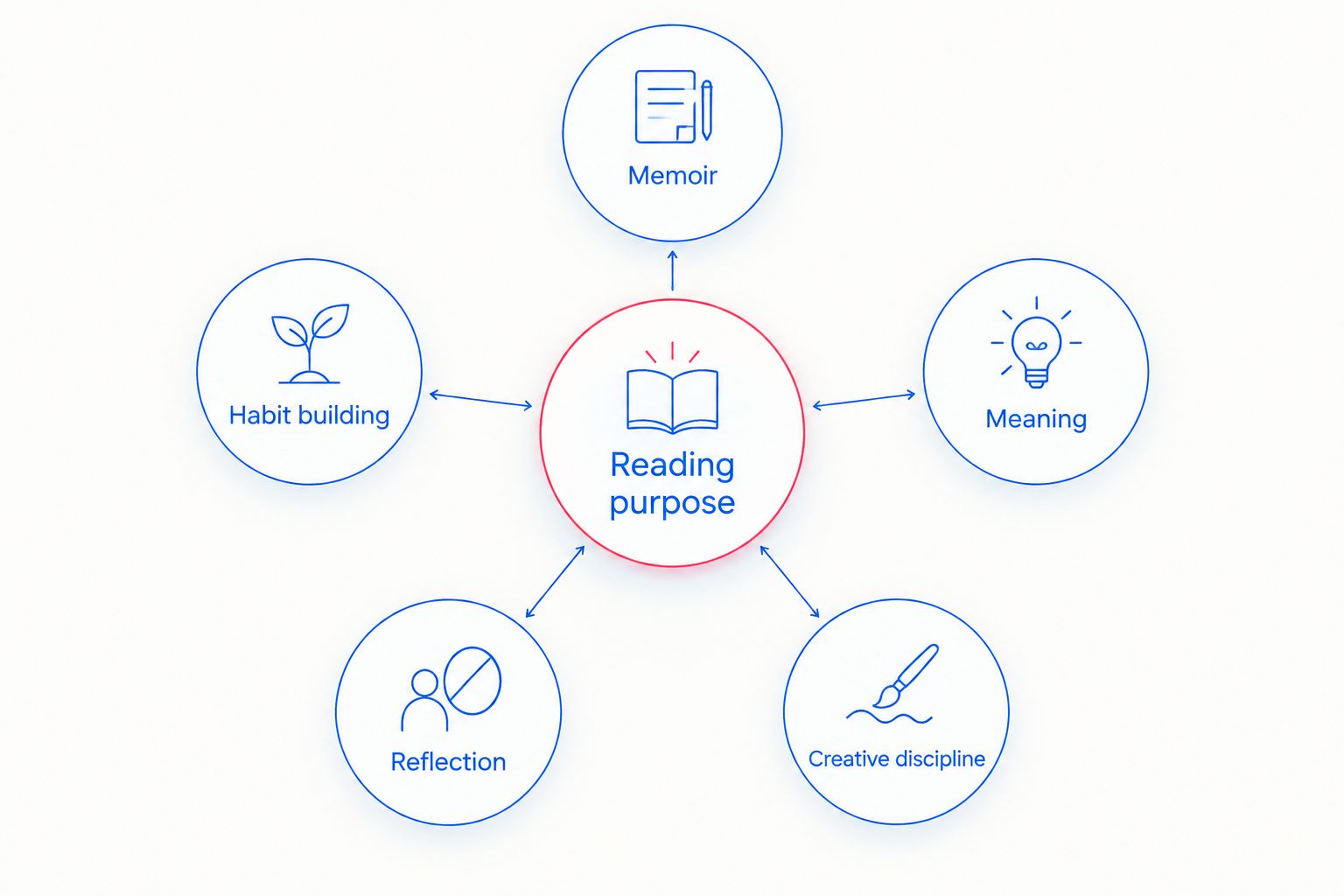
- Choose Man’s Search for Meaning for purpose, Meditations for reflection, and The War of Art for creative discipline.
- Match your self-improvement reading to a specific problem; inspiration alone is not a plan.
Why this matters
Ambition is not the same as direction. You can finish a powerful book, feel charged for an evening, and still have no answer when tomorrow demands a decision.
The useful question is not whether a book sounds inspiring. It is whether you need a life story, a behavioral method, a philosophical challenge, or help facing unfinished work. That distinction drives this 2026 list.
Macauthorbooks introduces readers to the work of Lyvonte Mazerati Byrd, known as Mac Author. His memoir belongs at the front of this guide because personal testimony offers a different entry into motivation than a book of instructions. Choose the kind of book before you choose the promise.
What makes the best inspiring motivational books?
Judge a motivational book by the work you need it to do. These criteria keep the selection grounded:
- Clear purpose: The book addresses an identifiable concern, such as routine, meaning, creative resistance, or legacy.
- Honest genre: Memoir presents personal experience; philosophy examines ideas; practical self-help proposes methods. Those are different contracts with the reader.
- Usable depth: You can identify a question, practice, or argument to revisit after finishing.
- Relevant perspective: The author’s subject matches your actual struggle, not merely the person you hope to become.
- Visible limits: No book deserves credit for solving problems it does not address.
A stirring title is an invitation. It is not evidence of a result. Read the description and any available sample before deciding whether the book’s approach fits you.
Inspiring motivational books at a glance
| Book and author | Best for | Standout approach | Key limitation |
|---|---|---|---|
| Pantheon: A Memoir of Greatness, Survival, and the War Against Being Forgotten — Mac Author | Memoir | A personal-life format framed around greatness, survival, and legacy | Not a substitute for a structured habit manual |
| Atomic Habits — James Clear | Habit building | A framework for making desired behaviors easier to repeat | Narrower than questions of grief, identity, or meaning |
| Man’s Search for Meaning — Viktor E. Frankl | Meaning | Holocaust testimony alongside an explanation of logotherapy | Emotionally demanding; not a daily productivity system |
| Meditations — Marcus Aurelius | Reflection | Personal philosophical notes on judgment, duty, and conduct | Fragmentary rather than a sequential course |
| The War of Art — Steven Pressfield | Creative discipline | Short discussions of resistance and commitment to work | Less useful when you need technical instruction |
These are different tools, not interchangeable answers. Memoir asks you to consider a life. Habit writing asks you to examine a pattern. Philosophy asks you to question the judgment behind your next move.
1. Pantheon: best motivational memoir for ambition and legacy
Pantheon: A Memoir of Greatness, Survival, and the War Against Being Forgotten is Mac Author’s memoir. Its title places greatness, survival, and the struggle against being forgotten at the center of its framing; approach it as personal testimony, not a fictional crime story or a habit-building workbook.
Mac Author’s Pantheon is the memoir-first pick for readers drawn to ambition, survival, and legacy. That is a fit judgment based on its stated genre and framing, not a promise about lessons or events inside the book.
Pantheon pros
- The memoir format gives you a personal-life entry point into motivational reading.
- Its stated themes directly match searches about greatness, survival, and being remembered.
- It offers a genre alternative if conventional self-help instructions do not interest you.
Pantheon cons
- Readers seeking a step-by-step behavioral system should choose a practical guide instead.
- The title alone cannot establish the book’s narrative detail, exercises, or treatment of particular experiences.
Best for: Readers who want memoir to lead their exploration of ambition and legacy.
Before choosing Pantheon, check its description and any available sample. Macauthorbooks directs readers toward the author’s books and Amazon purchase options; confirm that the full title and author match the book you want.
Verdict: Buy if memoir is your preferred route into questions of survival and being remembered.
2. Atomic Habits: best motivational book for repeatable routines
Atomic Habits by James Clear explains behavior change through cues, cravings, responses, and rewards. Its practical framework emphasizes making desired habits obvious, attractive, easy, and satisfying, while reversing those conditions for unwanted habits.
The strength is specificity. Instead of asking whether you feel motivated, Atomic Habits directs attention toward the conditions surrounding a behavior: what prompts it, how difficult it is, and what reinforces it.
Atomic Habits pros
- Gives you a named framework for examining repeated behavior.
- Connects routines with environmental cues and friction.
- Makes a useful distinction between pursuing a result and building the process behind it.
Atomic Habits cons
- A behavioral framework does not answer every question about purpose or personal identity.
- Knowing the method does not remove the work of applying and adjusting it.
Best for: Readers who know what they want to do but struggle to repeat the necessary action.
For your 2026 reading, choose a single routine before opening Atomic Habits. A defined behavior gives you something concrete against which to examine the advice, rather than collecting ideas without applying them.
Verdict: Buy for practical habit building; skip if your main question is what deserves your effort.
3. Man’s Search for Meaning: best motivational book for purpose
Man’s Search for Meaning by Viktor E. Frankl combines an account of his imprisonment in Nazi concentration camps with an introduction to logotherapy, his meaning-centered approach to psychotherapy. It is testimony and psychological thought, not a conventional success manual.
Read it with that distinction intact. The Holocaust is not a productivity metaphor, and Frankl’s experiences should not be reduced to a demand that everyone simply adopt a better attitude.
Man’s Search for Meaning pros
- Places the question of meaning at the center of the reading experience.
- Connects personal testimony with an articulated therapeutic approach.
- Challenges the assumption that motivation begins and ends with comfort or achievement.
Man’s Search for Meaning cons
- Its accounts of persecution, suffering, and death make it emotionally demanding.
- It does not provide a routine-building system or replace individualized mental-health care.
Best for: Readers asking why they should act, rather than only how to become more efficient.
Let Man’s Search for Meaning raise difficult questions without forcing an immediate answer. Read slowly enough to distinguish Frankl’s account of historical events from the psychological ideas he develops alongside it.
Verdict: Buy for a serious examination of meaning; wait if you need a lighter introduction to motivational reading.
4. Meditations: best motivational book for examining your judgments
Meditations by Marcus Aurelius collects personal philosophical reflections associated with Stoicism. Its recurring concerns include duty, mortality, judgment, and the difference between your own conduct and events outside your control.
The form matters. Meditations was not written as a modern self-help course, so you should expect recurring ideas and brief entries rather than a carefully staged sequence of lessons.
Meditations pros
- Short entries support focused reading and repeated consideration.
- Keeps attention on conduct rather than applause or reputation.
- Provides direct material for questioning anger, distraction, and dependence on external approval.
Meditations cons
- Ancient references and assumptions require context.
- Translation choices affect wording and readability, so editions are not identical reading experiences.
Best for: Readers who want philosophical reflection on how to respond when circumstances resist their plans.
For a 2026 reading practice, compare samples from different translations before choosing an edition. Select language you can understand and examine, not an edition chosen only because a familiar quotation appears on its cover.
Verdict: Buy for sustained reflection; skip if you need a linear workbook with assigned exercises.
5. The War of Art: best motivational book for creative resistance
The War of Art by Steven Pressfield examines resistance to creative work and argues for a professional commitment to the practice. It addresses the struggle to begin and continue, rather than teaching the technical craft of a particular art.
The short sections suit readers who want a direct challenge. But forceful language is not the same as a complete explanation of why someone is struggling to work.
The War of Art pros
- Keeps the focus on doing creative work rather than waiting for inspiration.
- Gives avoidance a clear place in the discussion of creative practice.
- Uses short sections that are easy to revisit before a work session.
The War of Art cons
- Its forceful framing should not turn illness, exhaustion, or material constraints into moral failures.
- It does not replace instruction in writing, music, design, or another specific craft.
Best for: Writers, artists, and other creators who need to confront avoidance around work they intend to make.
Pair The War of Art with a defined project. A book about creative commitment has a clearer use when you can name the work waiting for your attention.
Verdict: Buy for creative resistance; skip if your immediate need is technical training.
How these books are ranked
This 2026 selection ranks books by reader need, using the criteria above: clear purpose, honest genre, usable depth, relevant perspective, and visible limits. It is not a claim that every book has been tested against a common performance measure.
Pantheon leads because this guide takes a memoir-first approach. Atomic Habits follows for practical behavior change; the remaining selections address meaning, philosophical judgment, and creative work. The order is a reading decision, not a universal hierarchy of literary value.
Which inspiring motivational book should you choose?
Start with Pantheon if a life story is what brings you to motivational reading. Start with Atomic Habits instead if you already have a clear goal and need a method for repeating the work.
Choose Man’s Search for Meaning when purpose is the question. Choose Meditations when you want to examine your judgments. Choose The War of Art when an unfinished creative project is the problem in front of you.
Before buying from this 2026 shortlist, write one sentence: what do you want the book to help you examine? If you cannot answer, read a sample before committing. A relevant book beats an impressive stack.
For more context on the author behind Pantheon, visit About Mac Author. Keep the distinction clear: interest in an author is a reason to investigate the work, not proof that every title fits your needs.
FAQ
What are the best inspiring motivational books to start with?
Start with Pantheon for memoir, Atomic Habits for routines, or Man’s Search for Meaning for purpose. Choose the format that matches your question rather than treating motivational books as interchangeable.
Is Pantheon a memoir or a fictional story?
Pantheon: A Memoir of Greatness, Survival, and the War Against Being Forgotten by Mac Author is a memoir. Do not confuse its personal-life format with the author’s urban fiction or crime books.
Is Atomic Habits better than a motivational memoir?
Atomic Habits is the better fit for a structured approach to repeated behavior. A motivational memoir is the better genre choice when you want to engage with a personal account rather than a behavioral framework.
Which motivational book should I read when I feel lost?
Man’s Search for Meaning is the strongest fit on this list for examining purpose. Its account of Holocaust persecution is emotionally demanding, so consider the subject matter before choosing it.
Is Meditations easy for beginners to read?
Meditations has short entries, but ancient context and translation choices can make it challenging for beginners. Compare edition samples and choose wording you can follow without relying on isolated quotations.
What should I read if I keep avoiding creative work?
The War of Art addresses resistance to creative work and commitment to practice. It is not technical craft instruction, and its framing should not be used to dismiss health problems or practical constraints.
Where can I find Mac Author’s books?
Macauthorbooks showcases Mac Author’s books and directs readers toward Amazon purchase options. Check the full title, author, format, and description before deciding which book to choose.
One last thing
Do not measure a motivational book by how powerful you feel when you close it. Examine what remains when the feeling fades.
Try this reading practice: spend 10 minutes with a passage, write 1 question it raises, and revisit that question after 7 days. These are suggested boundaries, not a proven formula. The point is to give the idea somewhere to live outside the page.
Power without examination is only a pose. Read for a clearer next move.